Guide
Sweat Stick vs Sweat Cream: Which Format Is Better? (2026)
Choosing between a sweat stick and a sweat cream comes down to your training style, application preference, and desired feel. This guide breaks down the real-world differences in sweat enhancement, mess factor, and skin comfort, so you can pick the right format for your next workout.
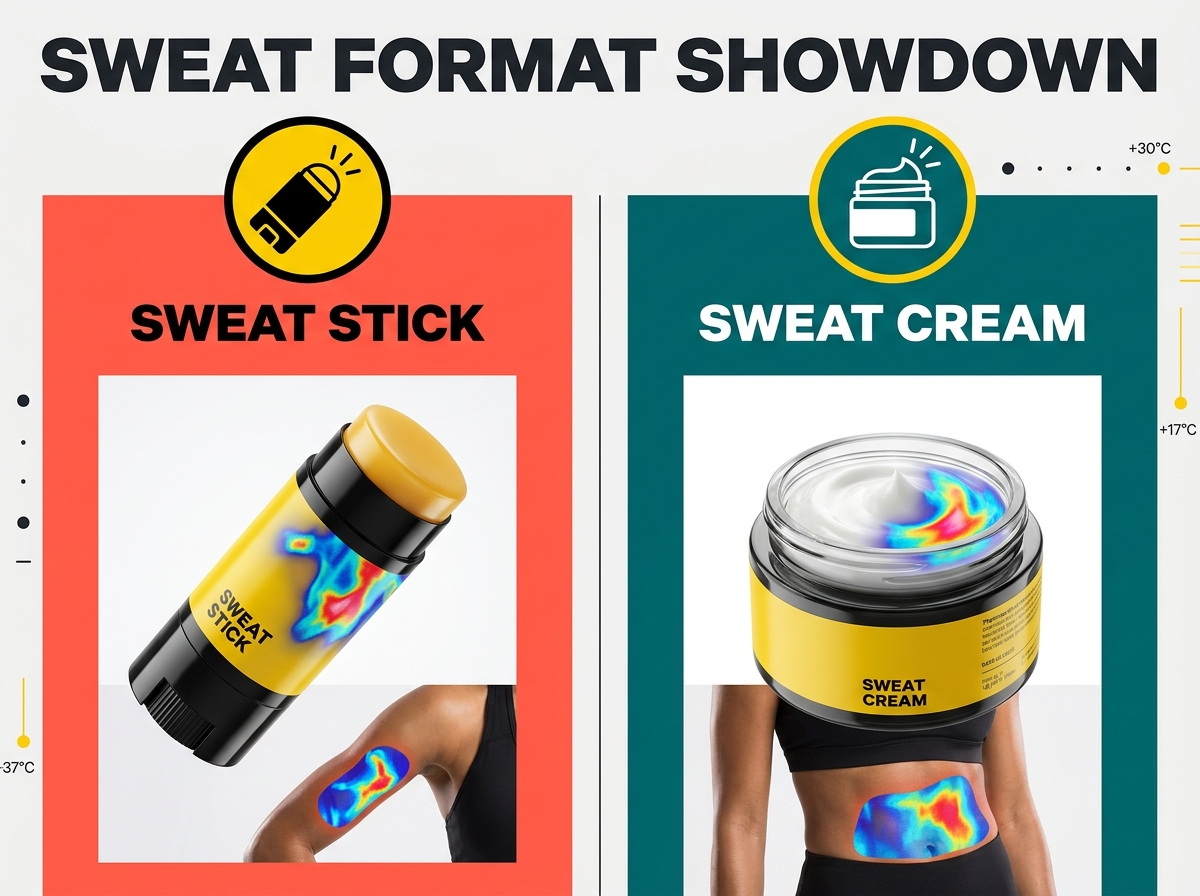
Sweat sticks offer cleaner, more targeted application, while sweat creams provide broader coverage and a customizable feel—your best format depends on your training needs.
Sweat sticks offer cleaner, more targeted application, while sweat creams provide broader coverage and a customizable feel—your best format depends on your training needs.
TL;DR: Sweat sticks are mess-free and portable; sweat creams deliver maximum coverage and a richer skin feel—choose based on your workout style and comfort preference.
Both sweat sticks and sweat creams are engineered to amplify sweat, boost circulation, and prime your skin for training. While both formats use similar active ingredients, the way you apply them can change your workout experience. Athletes and everyday users often choose based on application convenience, coverage needs, and skin feel.
Sweat Stick vs Sweat Cream: Quick Comparison
| Feature | Sweat Stick | Sweat Cream |
|---|---|---|
| Application | Direct, hands-free | Massage by hand |
| Coverage | Targeted spots | Large areas |
| Mess Factor | Low | Moderate |
| Portability | High | Medium |
| Skin Feel | Light, dry finish | Rich, moisturizing |
| Best Use | On-the-go, quick sessions | Full-body, intense training |
How Each Format Works
Sweat sticks deliver the formula via a solid, balm-like stick—just swipe and go. This format is ideal for athletes who want zero mess and quick application, especially before gym sessions or under gear. Sweat creams, on the other hand, are applied by hand and massaged into the skin. This allows for a customizable layer—thin for light workouts, thicker for heavy sessions—and ensures even coverage over large muscle groups.
"A sweat stick is unbeatable for mess-free, targeted use—perfect for arms, neck, or under waist trainers."
Both formats use similar active ingredients, such as natural oils, thermogenic agents, and skin conditioners. The difference comes down to how much product you can layer and how quickly it absorbs. Creams tend to feel richer and are preferred for dry skin or larger areas like the abdomen, thighs, or back.
Real-World Results: Sweat Amplification and Warmth
Internal thermography testing shows both sticks and creams measurably increase skin temperature and visible perspiration during exercise. On average, users report a mild to strong warming sensation within 5-10 minutes of application, with sweat output increasing noticeably in treated areas [1].
- Creams typically deliver a stronger warming effect due to easier massaging and thicker layering.
- Sticks offer a lighter, more controlled feel, which some users prefer for sensitive skin or humid climates.
"Sweat creams create a comfortable, even heat zone across the skin—perfect for all-over sweat amplification."
Application Protocols: Step-by-Step Guide
| Step | Sweat Stick Action | Sweat Cream Action | When |
|---|---|---|---|
| 1 | Twist up stick, swipe onto target areas | Scoop small amount, dab onto skin | Pre-workout, on clean skin |
| 2 | Blend lightly if needed (optional) | Massage in circular motions for 20-30 sec | 5-10 min before training |
| 3 | Cap and store stick | Wash hands after application | Immediately after use |
| 4 | Begin workout | Begin workout | After lead time |
Choosing the Right Format for Your Training
If you train in the gym, travel often, or want a fast, no-mess option, a sweat stick is the clear winner. It's compact, easy to apply without washing your hands, and perfect for touch-ups before or during a workout. For athletes focused on full-body routines, high-intensity intervals, or recovery sessions, sweat cream offers more control over coverage and feel. Creams work especially well when you want to layer over large muscle groups or combine sweat enhancement with skin hydration.
Safety & Tips
Always patch test any new sweat product on a small skin area before full application, especially if you have sensitive skin or are trying a stronger warming formula. Avoid eyes, face, mucous membranes, and broken skin. For best results, apply to clean, dry skin and allow a short lead time before training. Wash hands thoroughly after using creams. Sticks minimize hand contact but still require care if applying near sensitive areas.
Pros vs. Cons
| Pros | Cons |
|---|---|
| Mess-free (stick) | Less coverage (stick) |
| Customizable layering (cream) | Potentially messy (cream) |
| Portable and discreet (stick) | Requires hand washing (cream) |
| Rich skin hydration (cream) | Bulky for travel (cream) |
| Quick application (stick) | May be less intense (stick) |
Common Mistakes and Myths
- Myth: "Sticks and creams work differently."
Fact: Both formats use similar active ingredients for sweat amplification.
Fix: Choose based on format preference, not efficacy. - Myth: "Creams always cause irritation."
Fact: Most are formulated for comfort; irritation is rare with patch testing.
Fix: Always patch test, especially with hot formulas. - Myth: "More product means better results."
Fact: Over-applying can cause discomfort or waste product.
Fix: Use a thin, even layer for best results. - Myth: "Sticks can't cover large areas."
Fact: You can layer a stick, but it takes longer.
Fix: Use a cream for broad coverage.
Who It Helps / Who Should Be Careful
Best for:
- Athletes wanting targeted sweat enhancement (stick)
- Users needing full-body coverage or extra hydration (cream)
- Anyone seeking a warming boost during training
Use caution if:
- You have very sensitive skin (patch test first)
- You are new to thermogenic products (start with mild formulas)
- You train in hot, humid environments (lighter application recommended)
Quick Recap
- Sweat sticks: best for mess-free, targeted, portable use
- Sweat creams: ideal for full-body, customizable coverage and hydration
- Both formats amplify sweat and warmth during exercise [1]
- Always patch test before full use to prevent irritation
- Choose format based on your workout style and comfort needs
Frequently Asked Questions
Are sweat sticks or sweat creams more effective for sweat amplification?
Both formats deliver similar sweat-enhancing benefits; the difference is in application style and coverage, not efficacy.
Which format is better for sensitive skin?
Sweat creams often include more hydrating ingredients, making them gentler for dry or sensitive skin, but always patch test first.
Can I use both a sweat stick and a sweat cream in the same session?
It's best to use one format per session to avoid over-layering active ingredients, which can increase the risk of irritation.
How long before my workout should I apply the product?
Apply either format 5–10 minutes before training for optimal results.
Are there any areas I should avoid when applying sweat products?
Yes—avoid face, eyes, mucous membranes, and broken or irritated skin.
Next Steps
Now that you know the key differences between sweat sticks and sweat creams, you can confidently select the format that matches your training needs and comfort preferences. For more detailed product options and formula breakdowns, check out the latest sweat enhancement guides or consult with a fitness specialist for personalized recommendations.