Guide
Sweat Cream vs Body Wraps: Which Gets Better Results?
Sweat creams and body wraps are two popular methods athletes use to boost sweat and target visible results during training. This guide breaks down how each works, compares their effectiveness, and helps you choose the right option for your workout goals—backed by science and real user experience.
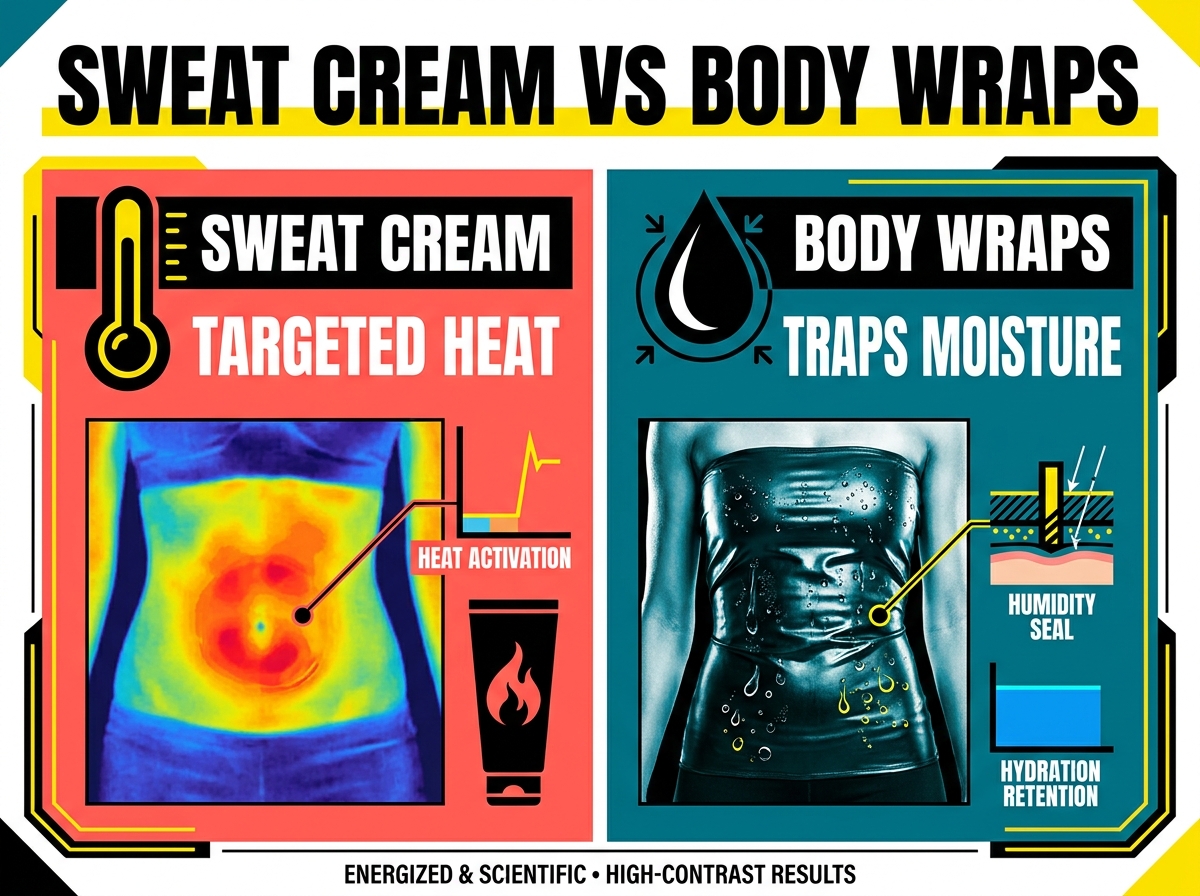
Sweat creams generally provide more targeted, science-backed sweat enhancement than body wraps, making them the preferred option for athletes seeking measurable training results.
Sweat creams generally provide more targeted, science-backed sweat enhancement than body wraps, making them the preferred option for athletes seeking measurable training results.
TL;DR: Sweat creams amplify perspiration and circulation with proven thermogenic effects, while body wraps mostly trap moisture for temporary water loss.
Both sweat creams and body wraps are widely used by athletes and fitness enthusiasts aiming to boost sweat, circulation, and visible workout results. Sweat creams—like TNT Pro Series—utilize thermogenic ingredients to increase localized warmth and perspiration, while body wraps typically rely on compressive materials to trap heat and moisture. But which method actually delivers more effective, lasting results?
Sweat Cream vs Body Wraps: Key Differences
| Sweat Cream | Body Wraps | |
|---|---|---|
| Mechanism | Thermogenic activation, boosts circulation and sweat | Physical barrier, traps heat and moisture |
| Scientific Support | Infrared thermography proven | Limited, mostly anecdotal |
| Application | Topical, targets specific areas | Wraps around body zones |
| Comfort | Customizable warmth, no restriction | Compression, may restrict movement |
| Duration of Effect | Enhances sweat during exercise | Temporary water loss, effect fades quickly |
| Best For | Cardio, lifting, HIIT, recovery | Short-term water weight reduction |
How Sweat Creams Work: Thermogenic Science
Sweat creams use active ingredients (like capsaicin or methyl nicotinate) to trigger a warming sensation and open pores, driving increased blood flow and perspiration in the applied area. Internal thermography studies show that treated skin can heat up by as much as +8.4°F during exercise compared to untreated skin [1]. This translates to more visible sweat and enhanced circulation, which many athletes report helps prime muscles and supports post-workout recovery.
"Infrared imaging shows measurable skin temperature increases in treated areas during exercise—proof of real thermogenic action."
Unlike body wraps, sweat creams don't restrict movement and can be tailored to your workout intensity and skin sensitivity. Formulas like TNT Pro Series are designed for daily use and offer options ranging from mild to strong warming effects.
Body Wraps: What They Really Do
Body wraps are typically made from neoprene or plastic and are worn around the abdomen, arms, or thighs. Their main effect is to trap heat and sweat against the skin, causing temporary water loss from the wrapped area. While this can lead to a short-term drop in weight or inches, the effect is largely cosmetic and fades once normal hydration returns [2].
There is limited scientific evidence supporting body wraps for fat loss or improved athletic performance. Most studies and expert reviews agree that the results are superficial—primarily water weight, not fat loss or metabolic change.
"Body wraps may help you sweat more, but most of that is water weight that returns after rehydration. Lasting results require real thermogenic activation."
Application and User Experience: Step-by-Step Comparison
| Step | Sweat Cream | Body Wrap |
|---|---|---|
| 1 | Apply thin layer to clean, dry skin | Wrap target area with neoprene or plastic |
| 2 | Massage for 20–30 seconds | Secure wrap snugly (not too tight) |
| 3 | Wait 5–10 minutes before training | Wear during workout or rest period |
| 4 | Train as usual, feel increased warmth/sweat | Expect heavy sweating under wrap |
| 5 | Remove with soap and water post-workout | Unwrap, dry skin, rehydrate |
Lasting Results: Sweat Creams vs Wraps
Sweat creams deliver measurable, repeatable increases in sweat and circulation, supported by thermographic data and user testimonials. The key benefit is targeted, science-backed activation—ideal for athletes looking to maximize every training session. Body wraps, on the other hand, offer a quick fix for water weight but lack the physiological activation needed for lasting improvement.
Safety & Tips
- Always patch test sweat creams, especially strong warming formulas, to avoid skin irritation.
- Avoid applying creams or wraps to broken skin, the face, or sensitive areas.
- For body wraps, do not wrap too tightly—restricted blood flow can be dangerous.
- Stay hydrated before, during, and after workouts to compensate for increased sweat loss.
- Use sweat creams as directed: a thin, even layer is more effective than over-application.
- Body wraps should never replace healthy nutrition or training for fat loss.
Pros vs. Cons
| Pros | Cons |
|---|---|
| Targeted sweat enhancement | Potential for mild skin irritation |
| Backed by thermography data | Not a weight loss solution alone |
| Customizable warmth and formula | May not suit ultra-sensitive skin |
| No movement restriction | Requires regular application |
| Visible results during training | Temporary effect without consistent use |
Common Mistakes and Myths
- Myth: "Body wraps melt fat."
Fact: Wraps only cause water loss, not fat reduction.
Fix: Focus on proven thermogenic methods for real results. - Myth: "More sweat means more fat loss."
Fact: Sweat is mostly water and electrolytes, not fat.
Fix: Use sweat as a sign of heat activation, not direct fat loss. - Myth: "Sweat creams are unsafe for daily use."
Fact: Most are safe when patch tested and used as directed.
Fix: Always patch test and follow instructions. - Myth: "Wearing both together doubles the effect."
Fact: Combining can cause irritation and discomfort.
Fix: Use one method per session, not both.
Who It Helps / Who Should Be Careful
Sweat creams are ideal for:
- Athletes seeking targeted sweat and circulation boosts
- Cardio, HIIT, and strength trainers
- Users with healthy, unbroken skin
Body wraps may suit:
- Those wanting temporary water weight reduction for events
- Short-term cosmetic goals
Caution for:
- Sensitive skin types (patch test first)
- Anyone with circulatory or skin conditions (consult a physician)
- Pregnant or breastfeeding individuals (avoid use without medical guidance)
Quick Recap
- Sweat creams activate thermogenesis for measurable sweat and heat gains [1].
- Body wraps trap moisture, leading to temporary water loss only [2].
- Scientific evidence favors sweat creams for lasting, athletic results.
- Always patch test and use products as directed for safety.
- Lasting results come from consistent training, not quick fixes.
Frequently Asked Questions
Do sweat creams actually burn fat?
No, sweat creams do not burn fat directly—they increase local sweat and circulation, which can support your training but do not replace a calorie deficit or exercise for fat loss.
Are body wraps safe to use every day?
Frequent use of body wraps can cause skin irritation or dehydration; they should be used sparingly and never wrapped too tightly.
Can I use sweat cream and a body wrap together?
It's not recommended, as combining both can increase the risk of skin irritation and discomfort. Use one method per session.
How quickly will I see results from sweat cream?
Most users notice increased sweat and warmth in the first workout, but visible changes depend on consistent use and overall training habits.
Is there scientific proof for sweat creams?
Yes, infrared thermography shows measurable increases in skin temperature and sweat output after sweat cream application during exercise [1].
Next Steps
Ready to amplify your workouts and see real results? Explore sweat creams designed for science-backed thermogenic activation and choose the formula that fits your training intensity and goals.